My Positive Induction Birth
Updated: Aug 7, 2025
It was my first pregnancy and I felt like I had read and researched all the birth books, I had done a hypnobirthing course and I was feeling certain that birthing at home would be the best place for me. However, I was quite unaware and naive about the affect the maternity system would have on my birth choices and birth outcomes. This is the first time I have written out my birth and it has processed a lot of emotions and made me realise the impact that good support can have on your birth. With my second birth, as soon as I knew I was pregnant I started booking in breastfeeding feeding support, postnatal support and made the decision to restrict bloods and unnecessary scans. My midwife with my second pregnancy was completely different to the one I had in my first pregnancy and this greatly impacted how I felt in my appointments, I didn't feel pressured and she gave me the freedom to make my own choices.
My first pregnancy was certainly a wild ride of emotions and I struggled to cope with it - from planning a home birth to C - Section back to home birth ending in a positive induction.
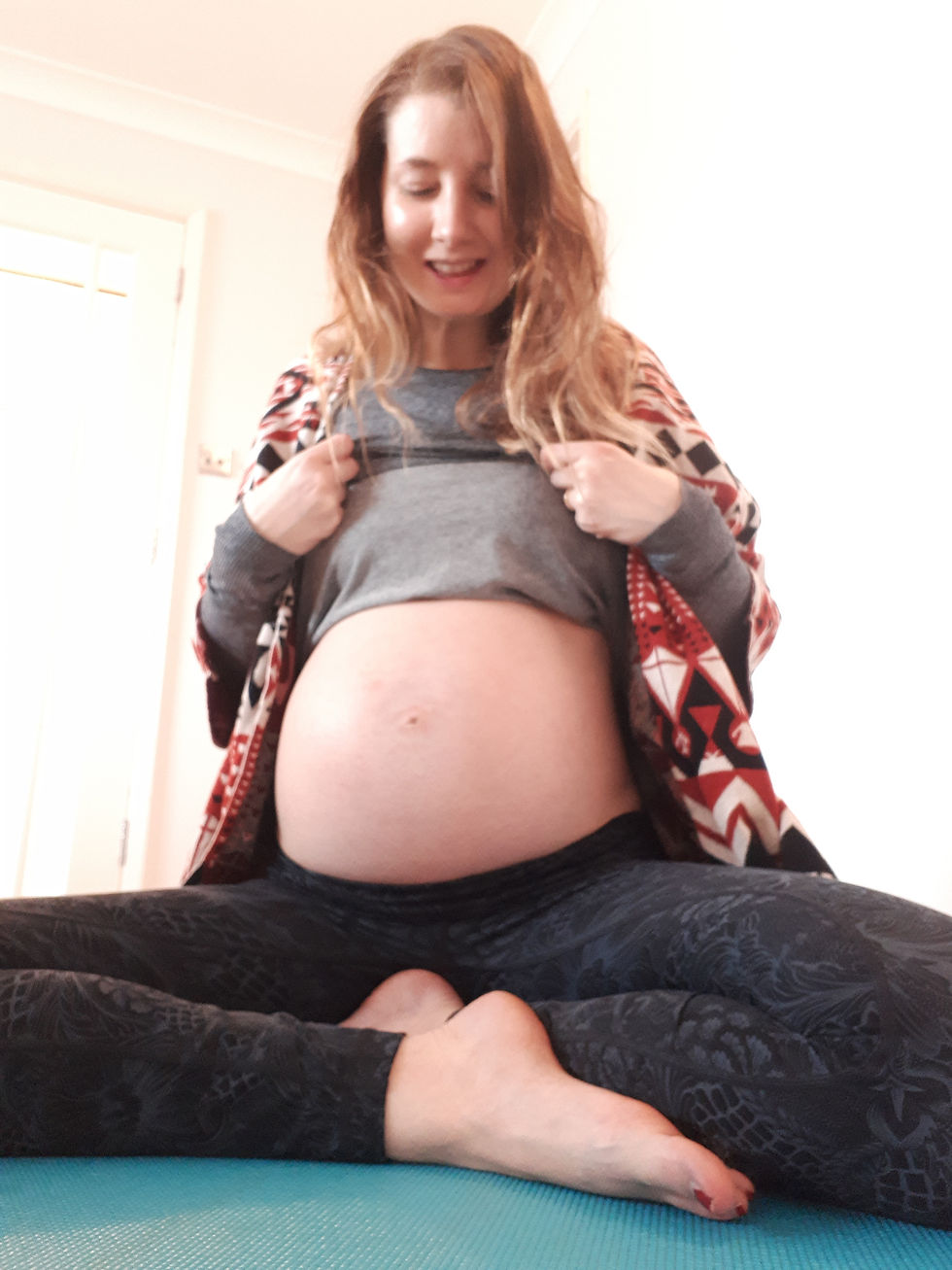
I had low platelets in both of my pregnancies and as my first pregnancy progressed, my baby was measuring small at 32 weeks, so I agreed to a growth scan because I loved seeing my baby in the scans. My baby was super active. Bearing in mind that scans only show a snapshot moment - they can't predict what will happen in the future, but in the growth scan they discovered that my baby was in a transverse position, leading to a challenging discussion with the consultant about the likelihood of needing a C-section. They were also very concerned about my platelet levels, which are crucial for blood clotting but they were decreasing with each blood test making surgery risky. An External Cephalic Version (ECV) was suggested to help turn the baby, but I had a strong feeling that my baby, who had been very active, would likely turn on her own. I believed there was enough time for her to turn before birth, so I declined the ECV but agreed to schedule a C-section as a precaution if she didn't turn by then. During these conversations about my platelets and my baby laying transverse, my vision of a home birth was suddenly swept from underneath me. I had video appointments with the anaesthetists to discuss how they would do the C section because with the application of pain relief it can cause bleeding, they were mitigating the risk of a postpartum hemorrhage (PPH) bleed and I would need to have blood on hand in case of a transfusion. All these discussion created a fear and a lack of control in my pregnancy. I was no longer in my happy pregnancy bubble and with each conversation my birth vision was slowly fading into the hands of the medical professionals. As the date of the C section approached I had a scan to check her position. She was now breech and so continued to go ahead with the C section. The night before the C Section at 38 weeks, she turned head down, so the following day we found out that we didn't need a C section after all. All the talks and discussions with the consultants and anaesthetists which had left me feeling very down and out of control with each appointment in the end were unnecessary, the emotional impact it had on me was unnecessary. When medical intervention gets involved it does impact the mother's confidence about her ability to grow a healthy baby in pregnancy and her ability to birth in the way she wants. Good support should be necessary. We have free health care in the NHS and we are beyond lucky for that, but maternity the NHS fails to provide sufficient woman centred support.
Following the planned C Section I returned home and decided to restart, continuing with my plan for a home birth plan. At my 40-week midwife appointment, even though I wasn't yet 40 weeks, an induction was scheduled for 42 weeks just in case I went overdue. This left me a bit confused because my midwife knew I wanted a home birth, although we hadn't discussed it in great length, it felt very uncertain as to whether she really knew my plans or not. She scheduled an induction without a real reason. I felt lost and left the appointment with so many questions. I wasn't even sure what they did in an induction birth. As my 41-week midwife appointment approached, I began to experience a bloody show. I was excited but aware of the induction that had been scheduled. I requested a sweep to speed up the process, hoping to avoid the induction and continue with a home birth. The bloody show persisted without any signs of contractions or cramping, just bleeding. I was informed that this could last for days or a week, and the induction date was nearing. I felt panicked, out of control and uncertain how and where I was actually going to birth. I wasn't sure if prolonged bleeding was normal and started to worry about it. After experiencing a gush of blood in the night, we went to the labor ward to be checked. They found nothing unusual but were eager to proceed with the induction in two days. I wasn't planning on going ahead with the induction and I was in two minds about waiting it out for longer but at this point I was beginning to admit defeat. I was very worried about the bleeding and with there being no sign of labour staring we went in to hospital.

At 42weeks, I went to the labour ward and had the balloon catheter inserted which is a device to mechanically open up the cervix, releasing prostaglandins. I asked whether I could go home and let it run its course but I wasn't allowed to go home due to the bleeding and low platelets. So I set my space up on the labour ward so that it was cosy and settled in to watch some feel good films to get the oxytocin flowing. That night I started to experience cramping and felt excited that things were progressing. The next day, upon removal of the balloon catheter the midwives tried to break the membranes but they weren't successful. I think they had already been ruptured and had slowly been releasing my waters. I then had a very strange experience whereby they needed to find a midwife with the longest fingers to bring my cervix forward, they weren't completely sure whether it had worked and ended up being a very awkward moment. At 1 pm we then started the oxytocin hormone drip, this is a synthetic hormone that mimics the endogenous oxytocin. I started to feel the sensations, very gradual at first but manageable. I felt very comfortable being on the birth ball and with my knowledge of upright forward and open postures I decided to stay on the birth ball and instinctively began to lean forwards. I held a towel between my hands and began pulling the towel outwards with each surge. I hadn't slept well the night before due to the checks they do on the labour ward and decided to stay on the birth ball where I could preserve my energy while knowing that I was in a good position to get my baby down into my pelvis. I carried on breathing through the surges as they gradually upped the syntocinon. I began to feel the need to pull down on something and my partner moved a large contraption over to hang our sling down from. We had been using it as a rebozo during pregnancy and it was comforting to know that this piece of material that had been giving so much relief and support in pregnancy could now continue to provide relief and support in birthing my baby. I began on pull down on the rebozo while I sat on the birth ball and leaning forwards allowing my sitting bones to open, tailbone to lift up and create more space for my baby to come down. This went on for a while, then all of a sudden I felt the need to poo. No one had forewarned me that this was normal in birth and although I tried to poo I couldn't. I started to move differently, side to side movements with my hips, walking around more - at least as much as I could while hooked up to the ECG monitor and with the hormone drip. At this point I was exhausted and began telling myself I couldn't do this. Little did I know that this was the transition phase. My partner asked how long this would take and she replied with ''it could take up to 14 hours''. I was horrified. As that information began to sink in, I realised that I needed to rest so that I could preserve my energy to push my baby out. I asked for pethidine to help me rest on the bed. Unfortunately it didn't provide much comfort because my baby was getting ready to be born but we didn't know this at the time. My surges were coming in thick and fast now and I decided to go back to what I found comfortable - on the birth ball and pulling down on the rebozo. I did this for a little while longer, but I needed to move. I remember saying that something felt different. The thought of doing this for another 14 hours made my heart sink, I couldn't do this for much longer. I was exhausted. I asked for an epidural. It took a while for the anaesthetist to become available and in that time I was moving around more, still needing to poo. I asked the midwife to check how dilated I was. As she had checked not too long ago she was reluctant to check, but she did and was surprised to find that I was crowning.
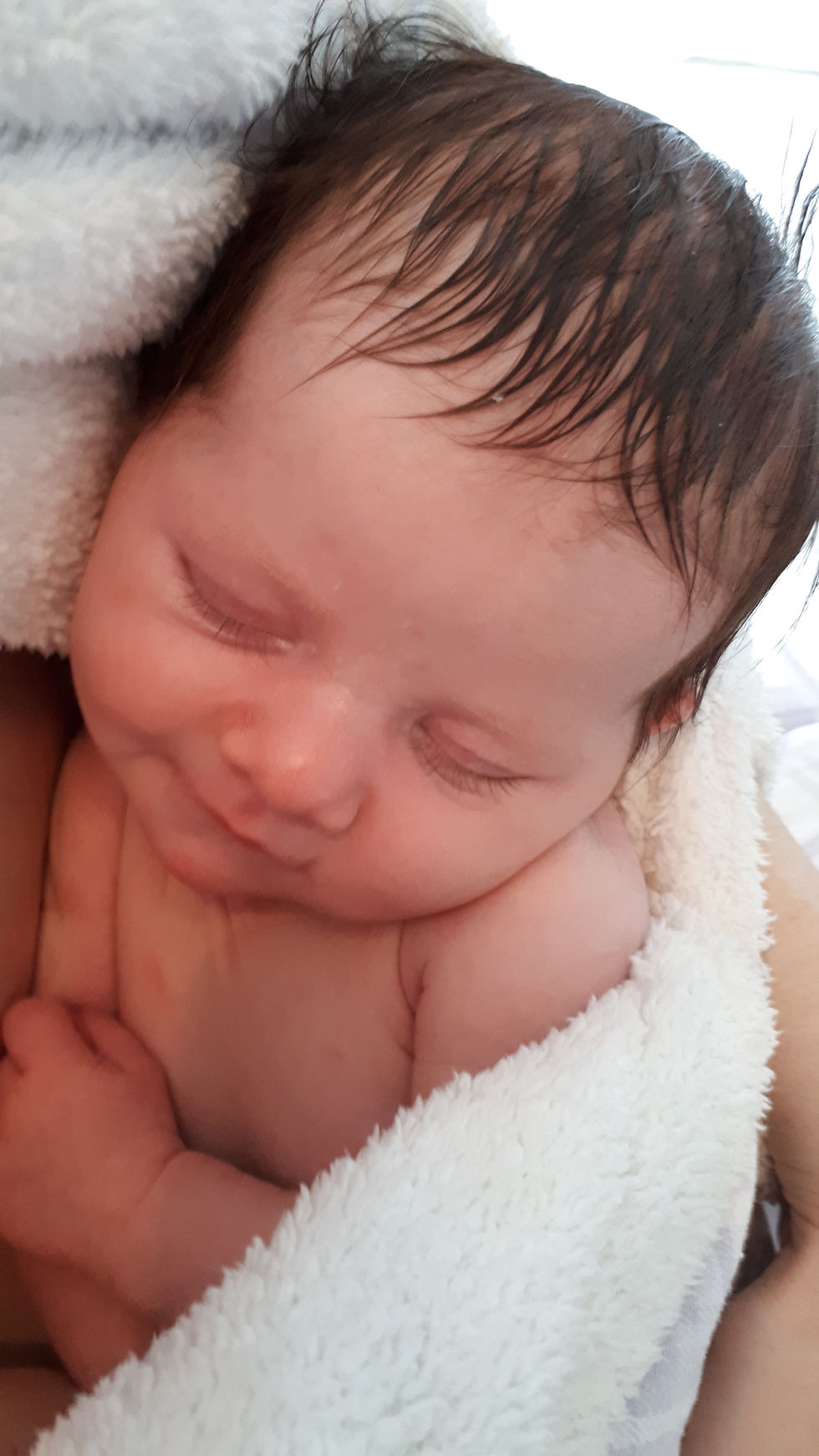
I went on all fours and breathed with my contractions. Being hooked up to the ECG the midwife could see that my baby's heart rate was starting to drop and she coached me through pushing with the contractions. I don't remember much of this having had pethidine in my system but I was releasing deep vocal mooing sounds to birth my baby. As I had been restricted from eating I took this opportunity to ask for some chocolate to help me relax into the the sensations and give me a little more energy. I reminded myself of all the powerful women in my lineage who had birthed and imagined them watching me in this moment cheering me on. She was born at 9.51 pm and passed between my legs. The cord was short so I couldn't pull her up but I looked at her for a moment and took her in. She didn't cry or make much movements. She looked at me knowingly saying ''Hi mummy! I'm here''. At this point my midwife explained that I'd had a PPH and put the injection into my thigh to stem the blood loss. I wasn't sure just how long it takes to birth the placenta, but it wasn't too long after the injection when my midwife started to press down on my uterus to help release the placenta and pulled on the cord. Unfortunately the cord snapped away from the placenta and I had to be taken to theatre to have it manually removed. It felt very backwards - I had birthed my baby without the need for an epidural yet needed the epidural to release the placenta. This meant I didn't have the lovely first bonding moments with my daughter. Despite this, I felt like a superhero for being able to breathe through the surges and birth her reasonably quickly on little sleep with little food (they don't like you to eat during an induction due to the likelihood of it leading to a C section).
When I look back on this experience , the talks with the consultants about my baby's position and needing a C section really did impact the positive mindset I'd been cultivating. I believe that if I'd had better woman centred support, someone to talk about what I was feeling, to help me through my choices and someone to advocate for my in my labour and birth I wouldn't have felt so lost. This experience lead me to believe that my body failed to go into labour, because I needed medical help and in my heart, felt that I wouldn't be able to feed my baby. I tried to breastfeed her, she latched well and there was no pain, but I didn't have the right support around me and I didn't have the knowledge on how to breastfeed her when she was very difficult to wake. Breastfeeding requires lots of energy for babies and mine wasn't able to stay awake. I was worried her blood sugars would drop and I was exhausted from birth and the lack of sleep I'd had in the hospital prior to birth. I didn't even have the energy to put in to breastfeeding. This birth took me on a path of devotion and connection with my daughter. I grieved our breastfeeding experience and sought out ways that we could bond in a different way. I carried her in the sling and she found comfort being close to me. I enjoyed our snuggles together with her spending the majority of the time in the sling. I practiced baby massage, baby yoga and makaton signing all of which gave us a big bonding boost. I devoted my time to her and took life slowly, embracing all the small and big moments. Amelie is my reason for wanting to share the magical bonding moments that can happen through baby massage, baby yoga and signing.
I see my first birth as a positive induction because I felt like a super hero following my baby's birth. I was managing the surges well and actually enjoyed the experience. I remember feeling like I was surfing the surges despite never surfed before. I had limited knowledge of the way the induction procedure I was done, no one told me about the risks of an induction birth and I didn't know how to advocate for myself at the time despite having done a hypnobirthing course. There was no one to say ''are you sure you want to continue with the synocinon drip?'', ''would you like to wait for the placenta to come on its own'', no one to say ''give her time with her baby''. The birth partner needs guidance too, after all they are also experiencing this with fresh eyes, as a procedure, trusting that the midwives know what they are doing. There needs to be someone to hold both the birth partner and the mother in these situations. This is one of the reasons why I am training to become a Doula.

Comments